Summer Is Over. September resolutions are here
if you spent the summer enjoying ice cream on the beach, skipping the gym, and saying yes to every aperitivo That’s not a bad thing, that’s what summer is for. Rest, spontaneity, and pleasure are part of a healthy life too. But now the call of September is here, the light is changing, routines are calling, and you’re feeling that familiar itch: I want to feel good in my body again. You need your structure back and you are quite right about it. Structure is what makes progress possible.
This guide is about rebuilding momentum and finding your way back to a healthy routine made of good food and regular workouts.
Why September Is the Perfect Reset Point
September has a psychological advantage most people underestimate:
- Natural rhythm shift : school, work, and social calendars all reset together, so your environment is already nudging you toward routine.
- Momentum from motivation spikes : Energy is real and you can exploit it to your advantage, its called “the fresh start effect”.
- Fewer social occasions : at least until December. fewer holiday parties and impromptu terraces means fewer daily decision points to navigate.
Step 1: Reset Your Mindset Before Your Meals
Before deep diving in your gym and your plate, you need to get your mental framing right. This is how you make sure your reset lasts more than two weeks and becomes permanent.
- Drop the “All or nothing philosophy”
- Set a direction not a short sprint
- Pick 1–2 habits, to start with not twelve.
Trying to overdo it from the beginning is the best way to give up after the second week.
Step 2: Rebuild Your Eating Habits Gradually
You don’t need to stop everything straight from the start, you definitely don’t need to go extremely restrictive to get back on track. What you need is structure, routine and consistency. Here is a realistic framework :
- Anchor your meals. Aim for 3 regular meals a day at consistent times. This alone regulates appetite and energy more than most “diets.”
- Fill half your plate with vegetables. It’s simple, sustainable, and doesn’t require tracking anything.
- Prioritize protein at each meal (eggs, fish, poultry, legumes, tofu) it supports satiety and helps preserve muscle if you’re also training.
- Rehydrate first. Vacation often means more alcohol, more sun, less water. Start each day with a big glass of water before coffee.
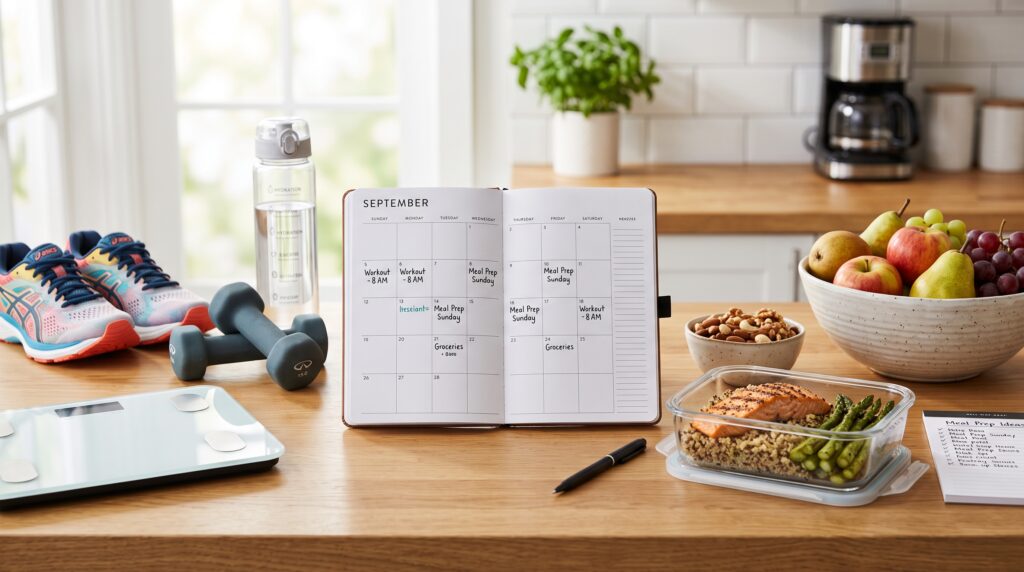
- Start again home-cooking. Meal prepping 2–3 dinners on Sunday removes the daily “what do I eat” decision fatigue that derails people by Wednesday.
- Allow flexibility. Allow yourself to keep enjoying the pleasures of life at least once a week to keep you motivated.
Step 3: Your September Training Kickstart Plan
The goal for week one isn’t to crush yourself. It’s to show up consistently and let intensity build naturally.
Week 1–2: Reactivation
- 3 sessions/week, 30–40 minutes
- Mix of brisk walking, bodyweight strength (squats, push-ups, planks), and light cardio
- Focus: rebuilding the habit, not breaking records
Week 3–4: Rebuilding Strength & Endurance
- 4 sessions/week, 40–50 minutes
- Add resistance training (weights or bands) 2x/week
- 1–2 cardio sessions (cycling, jogging, swimming)
- Focus: progressive overload, slightly more reps, weight, or duration each week
Ongoing: From September … Make It a Lifestyle
- Settle into 3–5 sessions/week depending on your schedule and recovery
- Track consistency, not perfection a simple checklist of “did I move today?” beats obsessing over performance metrics
- Add one enjoyable activity (dance, hiking, padel) so movement doesn’t feel purely transactional
Step 4: How to Actually Stay On Track after September
This is where most resets die, so build in these supports from day one:
- Track habits, not just weight. A habit streak (workouts done, water intake, sleep) is more motivating and less discouraging than a scale.
- Schedule workouts like meetings. Make them high priority and do not skip them because of lack of time.
- Expect setbacks: The people who succeed aren’t the ones who never slip, they’re the ones who restart without spiralling.
- Consider non-scale wins: More energy, better sleep, clothes fitting differently, these sustain motivation longer than a number on a scale.