You open a packet of biscuits, planning to have two. A few minutes later, you reach for another and wonder why stopping feels so difficult. If this sounds familiar, you may have asked yourself: Why do I overeat when I know how I want to eat?
Food plays a part, but so do hunger, tiredness, emotions and the habits we repeat every day. Understanding those influences gives you something more useful than another promise to “be good tomorrow”: a practical place to start.
We can overeat because some foods make it easy to consume a lot quickly, because we haven’t eaten enough earlier, or because we seek comfort rather than nourishment. Several of these factors can overlap.
How Ultra-Processed Foods Can Encourage Overeating
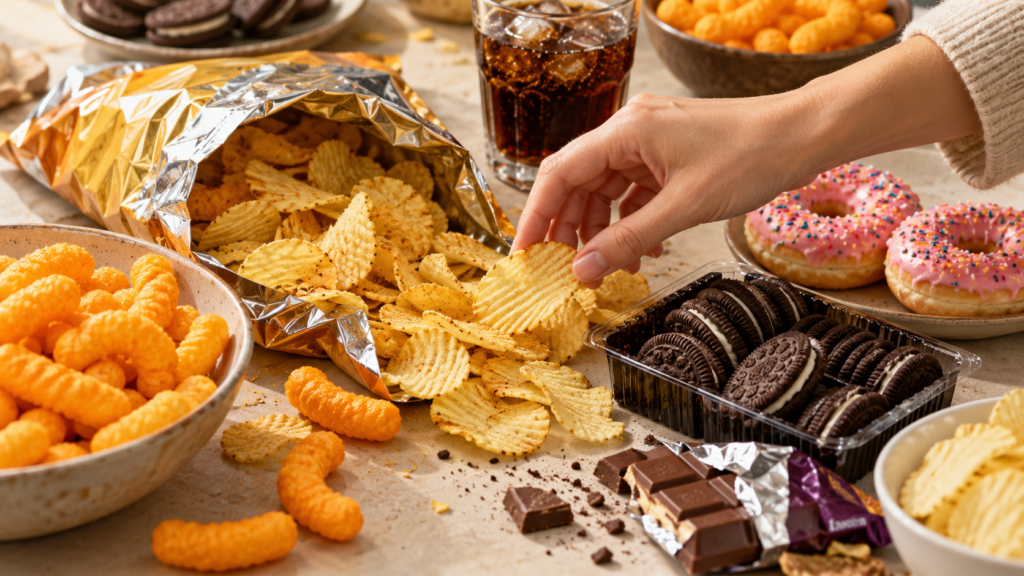
Many packaged snacks combine an appealing taste with a texture that takes little effort to eat. Think of crisps that almost dissolve in your mouth, or soft biscuits you can finish in a few bites.
Ultra-processed foods typically involve industrial formulations and ingredients or additives that we rarely use in home cooking. Examples include many soft drinks, confectionery products, packaged snack foods and reconstituted meat products. However, the category covers a wide range of foods, with different nutritional qualities.
What a controlled study found
n a 2019 trial led by Kevin Hall at the US National Institutes of Health, 20 adults lived at a research centre and followed two diets: an ultra-processed diet for two weeks and an unprocessed diet for two weeks. They could eat as much or as little as they wanted.
On the ultra-processed diet, participants ate around 500 extra calories a day, on average. They gained about 0.9 kg during that phase and lost about 0.9 kg during the unprocessed phase.
The researchers designed the offered menus to match several nutritional features, including total sugar, fat, sodium and fibre. That makes the finding harder to explain with “too much sugar” alone.
This was a small, short study under controlled conditions. It shows that the ultra-processed menu tested caused greater intake; it does not prove that every ultra-processed product has the same effect.
Taste, texture and eating speed matter
Researchers use hyper-palatable to describe foods with particular combinations of fat, sugar, carbohydrates and salt that may make them especially rewarding to eat.
In a 2023 analysis of controlled feeding data, researchers found that higher energy density, faster eating and a greater proportion of hyper-palatable foods each related to higher meal energy intake.
Energy density simply means how much energy a food contains for its weight. When a food packs a lot of energy into a small amount and you eat it quickly, consuming more than you intended becomes easier.
That gives us a useful practical direction: look beyond individual nutrients and consider the whole eating experience.
Are These Foods Actually Addictive?
It can certainly feel that way when you keep reaching for more.
Some researchers argue that certain ultra-processed foods can contribute to addictive-like eating. Others question whether “food addiction” describes a distinct condition or overlaps with other eating difficulties. A 2025 critical review highlights those unresolved questions.
For that reason, calling all unhealthy foods “highly addictive” goes further than the evidence supports.
A craving is real, but having a craving does not automatically mean you have an addiction. You can recognise that a food feels difficult to stop eating without turning it into something you must fear.
Does a Lack of Fibre Explain Overeating?
Fibre deserves a place in this conversation, but it cannot explain everything.
Vegetables, fruit, beans, lentils and whole grains provide fibre. When snack foods regularly replace those foods, you may miss opportunities to build more substantial meals.
Still, fibre does not act as a universal appetite switch. A systematic review by Clark and Slavin found that most short-term fibre interventions did not significantly reduce appetite or food intake.
The practical lesson is to build varied meals rather than expect one added ingredient to stop cravings. A meal should give you enough food, enjoyment and nourishment to carry you through the next part of your day.
Why We Overeat Even When Ultra-Processed Foods Aren’t Involved
We haven’t eaten enough earlier
A rushed morning, a missed lunch and a busy afternoon can leave you arriving at dinner intensely hungry. Before blaming your evening appetite, look at what happened earlier. Did you eat a proper lunch, or did coffee and a few mouthfuls have to do the job?
The National Institute of Diabetes and Digestive and Kidney Diseases notes that skipping meals, eating too little or avoiding certain foods may contribute to binge eating in some people. Occasional overeating and binge-eating disorder are different, but harsh restriction deserves attention.
We want comfort after a difficult day
Sometimes the urge to eat comes with frustration, loneliness or the need for a break. Research on stress and eating behaviour describes how stress can change food choices and intake, although people respond differently: some eat more, while others eat less.
If food has become your easiest source of relief, simply telling yourself to stop leaves the original need unanswered. Ask: Am I hungry, overwhelmed, or both? You may need a meal and a moment of quiet.
We are tired
According to NIDDK guidance on weight and health, insufficient sleep may increase hunger, food intake and the likelihood of choosing less nutritious foods. Sleep won’t solve every eating difficulty. But if evenings feel particularly hard after short nights, tiredness may be part of the pattern.
How to Reduce Overeating Without Starting Another Strict Diet
1. Give meals a reliable place in your day
Start with a rhythm you can maintain. Within the Rebalanced Fork approach, that can mean three meals and an optional snack when you need one. Use the structure to support yourself. If you feel hungry between meals, respond to that hunger rather than treating the timetable as a rule you must obey.
2. Build a meal you will actually enjoy
Use the Rebalanced Fork plate as a flexible starting point:
- Roughly half vegetables.
- Roughly a quarter protein, such as fish, eggs, poultry, beans or lentils.
- Roughly a quarter starchy foods, such as potatoes, rice, couscous, bulgur or pasta.
- Add a source of unsaturated fat, such as olive oil, nuts or seeds.
Adjust the amounts to your hunger and needs. These proportions offer a visual guide; they don’t guarantee fullness or weight loss.
For example, try roasted vegetables with fish, potatoes and olive oil. Or make a chickpea and couscous salad with tomatoes, cucumber, herbs and lemon dressing. Chickpeas contribute both protein and carbohydrate, so your plate needn’t fit four tidy boxes.
3. Give yourself time to notice the meal
Sit down when you can. Put your food on a plate and take a pause before serving more. You don’t need to count chews or turn lunch into an exercise. Try eating at a pace that lets you taste your food and notice how you feel. If you remain hungry, eat more.
4. Make everyday meals easier to assemble
Keep useful staples available: frozen vegetables, tinned beans, eggs, plain yogurt, potatoes, pasta and tinned fish.
5. Keep pleasure and leave room for flexibility
Enjoy a dessert or a few biscuits without feeling guilty and thinking that the day has gone wrong. Return to your usual meals. If you ate a bit more than you should, Look at what might have contributed. Hunger, stress, speed or circumstance, rather than trying to compensate by skipping food.
When Overeating Needs More Support
Occasionally eating past comfortable fullness does not automatically mean you have an eating disorder.
However, if you repeatedly eat large amounts while feeling unable to stop, experience significant distress or hide your eating, speak with your GP or a qualified eating-disorder professional. NIDDK lists these among the signs that warrant attention.
Start With the Pattern You Can Change
The next time you wonder why you overate, look at the hours before it happened.
Was lunch too small? Did you eat quickly? Were you exhausted? Did you need comfort after a demanding day?
Choose one practical change: prepare a proper lunch, sit down for your snack, or make dinner easier to put together. The Rebalanced Fork approach begins with meals you enjoy and habits you can repeat without counting every bite.