You go to the supermarket for breakfast cereal, yogurt or a quick snack. Suddenly, almost everything seems to come with extra protein. If you try to eat healthier, that promise can be tempting. After all, protein is an important part of a balanced diet.
But high-protein foods are not automatically healthy. Some provide useful nutrients. Others are ultra-processed foods with added protein and a convincing message on the front.
So, before you pay more for the protein version, turn the packet over. The ingredients and nutrition table will tell you much more than the headline promise.
What does “high protein” actually mean?
A high-protein claim describes one part of a food’s nutritional profile. It does not assess the whole product.
Under the rules applying in Great Britain, a food can carry this claim when protein supplies at least 20% of its energy. That is different from saying it contains 20g of protein per serving. You can check the official conditions for nutrition claims.
However, the claim does not tell you whether the food has a simple recipe. Nor does it tell you how much sugar, salt or saturated fat it contains.
Think of it as one piece of information, rather than a recommendation to buy.
Can high-protein foods be ultra-processed foods?
Yes. A food can contain plenty of protein and still be ultra-processed.
The NOVA classification places ultra-processed foods in Group 4. These are industrial formulations that often contain ingredients such as protein isolates, flavourings, sweeteners and emulsifiers. The researchers behind NOVA explain this in their guide to identifying ultra-processed foods.
Still, counting ingredients is not enough. A homemade dish can have a long recipe, while an ultra-processed product may have a relatively short one.
In September 2026, the French consumer organisation foodwatch highlighted this issue in its investigation into ten protein-labelled products. It identified markers of ultra-processing behind the prominent protein claims.
That raises a useful question for shoppers: what else are we buying along with the protein?
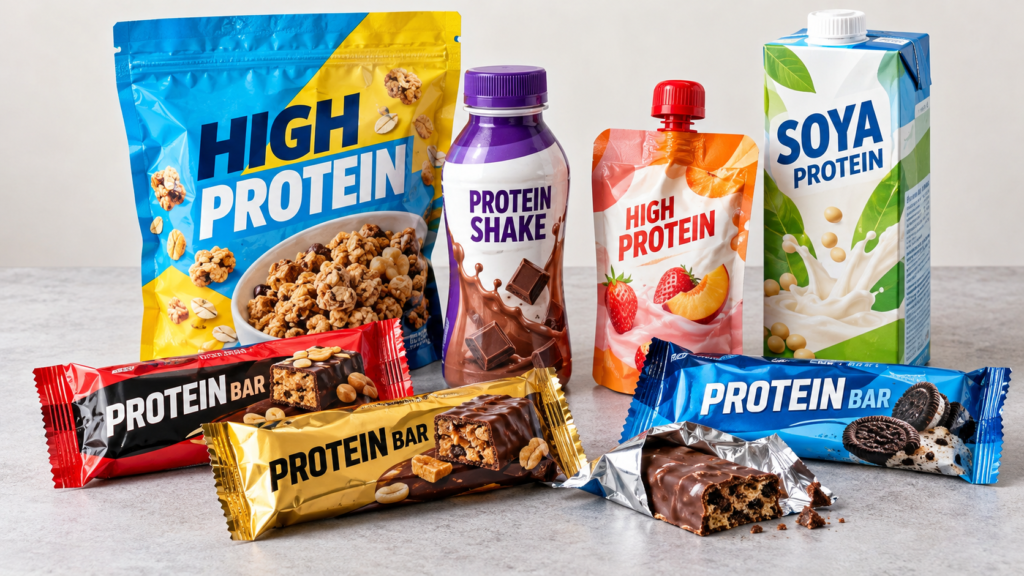
Five high protein products that are Ultra-processed foods
These categories are starting points for reading labels. Recipes vary, so judge the product in your hand.
1. High-protein granola
Granola can look like an obvious healthy choice. Add “high protein” and “low sugar” to the packaging, and it becomes even more persuasive. Yet some recipes combine oats with extracted fibre, added gluten, sweeteners and flavourings.
For example, some granola sold in supermarkets carry a high-protein claim, yet their ingredients include soluble corn fibre, wheat gluten, maltitol, sucralose, flavourings and soya lecithin.
This is why the whole label matters. The protein is there, there are also markers of ultra-processing. A high-protein claim alone is not enough.
Take the oats in your granola. They already contain protein and fibre. But manufacturers can add wheat gluten for protein and soluble corn fibre for fibre. This boosts the numbers on the packet and gives them another selling point.
Adding more protein or fibre does not automatically make the whole recipe healthier.
So, look beyond the big claim on the front. Where does the protein come from? What else has been added? The whole recipe matters, not just the number of protein.
A simple alternative: try plain oats with plain yogurt, fruit and a few nuts. Or choose a granola with a recipe you prefer, then compare its nutrition and price.
2. Protein bars
Some bars use isolated proteins, sweeteners, syrups and ingredients that keep them soft or give them a chocolate-like coating. These formulations commonly fit the NOVA description of ultra-processed foods.
The added protein loses its appeal as a healthy selling point when it comes with a long list of additives.
A simple alternative: plain yogurt and fruit, a boiled egg, or a small sandwich with a protein-rich filling. You can also enjoy a homemade chocolate bar.
3. Ready to drink protein shakes
With a protein drink, the number on the front can easily become the main reason to buy.
However, check what creates the flavour and creamy texture. If the recipe includes sweeteners, flavourings and texture-enhancing additives, the drink may fit the ultra-processed category. Classification depends on the complete formulation.
If your goal is to eat healthy and real food, drinking a protein shake full of additives is not the best practice.
A simple alternative: milk, plain yogurt, or a homemade blend of milk or yogurt with fruit, depending on your preferences and dietary needs.
4. Fruit and yogurt protein pouches
Fruit, yogurt, vitamins and protein sound like a perfectly healthy option.
Nevertheless, those words do not describe the complete recipe. Look at how much fruit and yogurt the pouch contains. Then check whether the manufacturer adds protein ingredients, emulsifiers, sweeteners or flavourings.
Avoid judging the pouch solely by one unfamiliar word. Equally, avoid assuming that fruit on the packaging makes the whole product a healthy choice.
A simple alternative: plain yogurt with chopped fruit. For a busy morning, prepare it in a small container the night before.
5. High-protein soya plant-based drinks
Soya naturally contains protein, so it is worth comparing a high-protein soya drink with the standard version.
Some high-protein soya drinks contain soya beans alongside sugar, flavourings, potassium phosphates and gellan gum.
Before paying extra, compare how much protein each drink provides and check the ingredients. You may decide that the extra protein is not worth the higher price and prefer an alternative with a simpler and cleaner recipe.
Why protein is not the answer?
Research gives us reasons to pay attention to how much ultra-processed food we eat overall.
A major review published in The BMJ found associations between higher ultra-processed food consumption and several adverse health outcomes, including type 2 diabetes and cardiovascular-related outcomes. You can read the research review here.
For everyday shopping, the practical lesson is straightforward: do not let one appealing nutrient distract you from the rest of your food choices.
How to read a high-protein food label
You do not need to analyse every packet for ten minutes. Start with these five checks:
- Read the ingredients. What makes up most of the product?
- Check your actual portion. A figure per 100g may look very different from what you eat.
- Look beyond protein. Compare sugar, salt, saturated fat and fibre.
- Compare the ordinary version. What does the protein version actually add?
- Check the price. Decide whether the difference is useful enough to justify the cost.
For instance, if a cereal contains 15g of protein per 100g, a 40g portion provides 6g. That is useful information, but it is not the same as eating 15g.
Simple protein sources for everyday meals
Before filling your basket with high protein snacks, consider the foods you already enjoy.
Eggs. Plain yogurt. Fish. Chicken. Lentils. Chickpeas. Beans. Tofu. Legumes. milk. Cheese. Cereals.
For a French and Mediterranean-inspired approach, I would start with meals:
- Plain yogurt with oats and fruit for breakfast.
- Lentils with roasted vegetables and olive oil for lunch.
- Fish with potatoes and green beans for dinner.
- Chickpeas with couscous and vegetables for an easy family meal.
This is the approach I want to encourage through Rebalanced Fork: make everyday meals satisfying, varied and enjoyable. Protein has a place on the plate, alongside vegetables, starchy foods and fats.
Should you buy high-protein foods?
Sometimes, yes. A product may suit your needs, taste or schedule. But buy it because you have looked at the whole product and decided it works for you. Next time a packet promises extra protein, turn it over. Check the recipe, the portion and the price. Then compare it with a simpler option.
You deserve more information than a large number on the front of a packet.